Osamu James Nakagawa | Trace
October 1, 2026
CURATORIAL NOTE
Osamu James Nakagawa works with the assumption that long dormant rocks have something to say, as do trees that have quietly witnessed decades of human behavior. In Trace, he finds a way to bring physical touch into his photography, coaxing the materials to speak, waking up the wounds through largely forgotten objects from the American past.
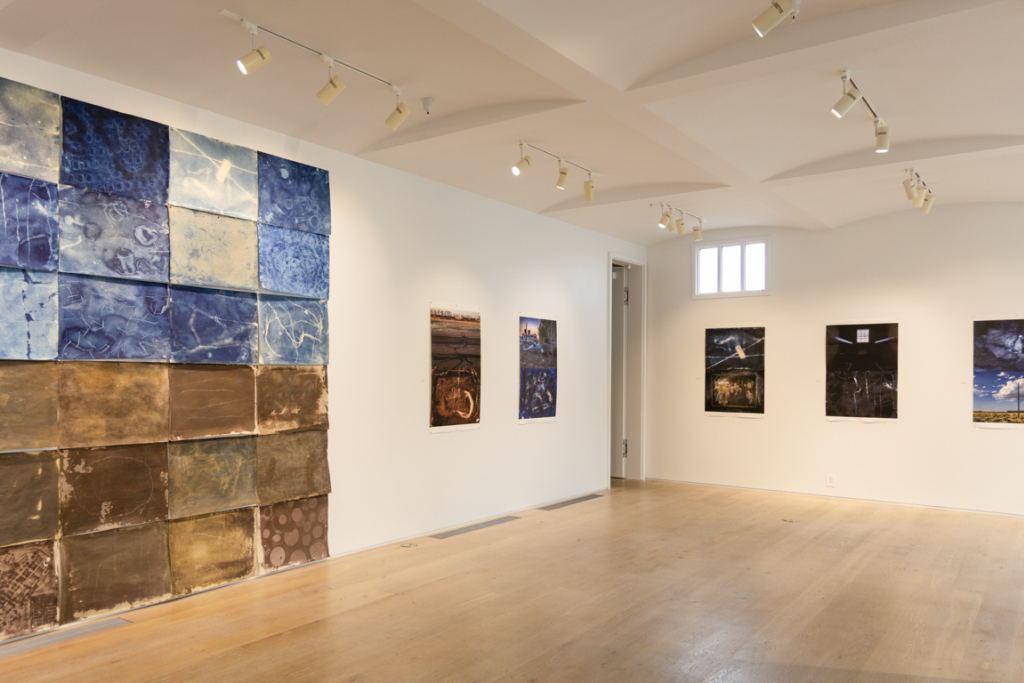
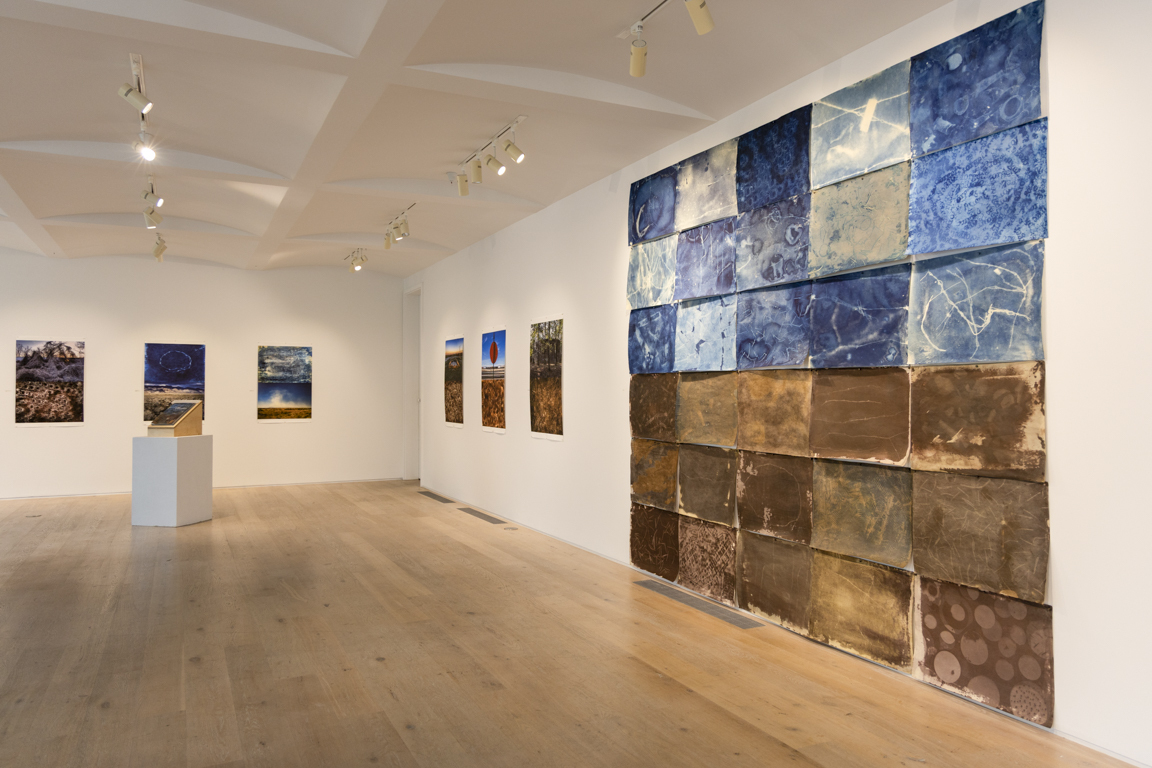
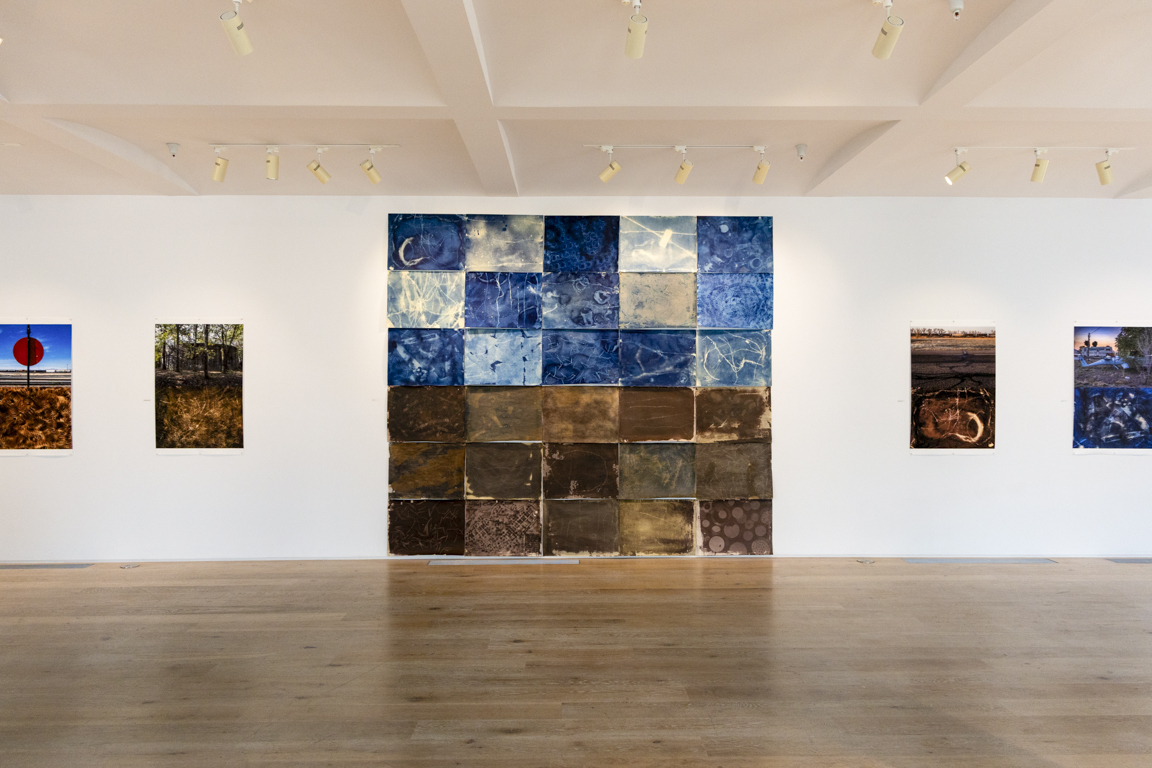
In response to Japanese American incarceration sites, to some visceral feeling there, Nakagawa brought paper and chemistry to make cyanotypes and salt prints. These prints are made when objects directly touch the paper, with the sun beating down around them. In a floor to ceiling installation, blue cyanotypes sit above the gallery’s horizon line, like an open sky. Brown salt prints fall below the line, becoming earth and soil. The piece is abstract but still forms the basic structure of the landscape, at an enveloping scale.
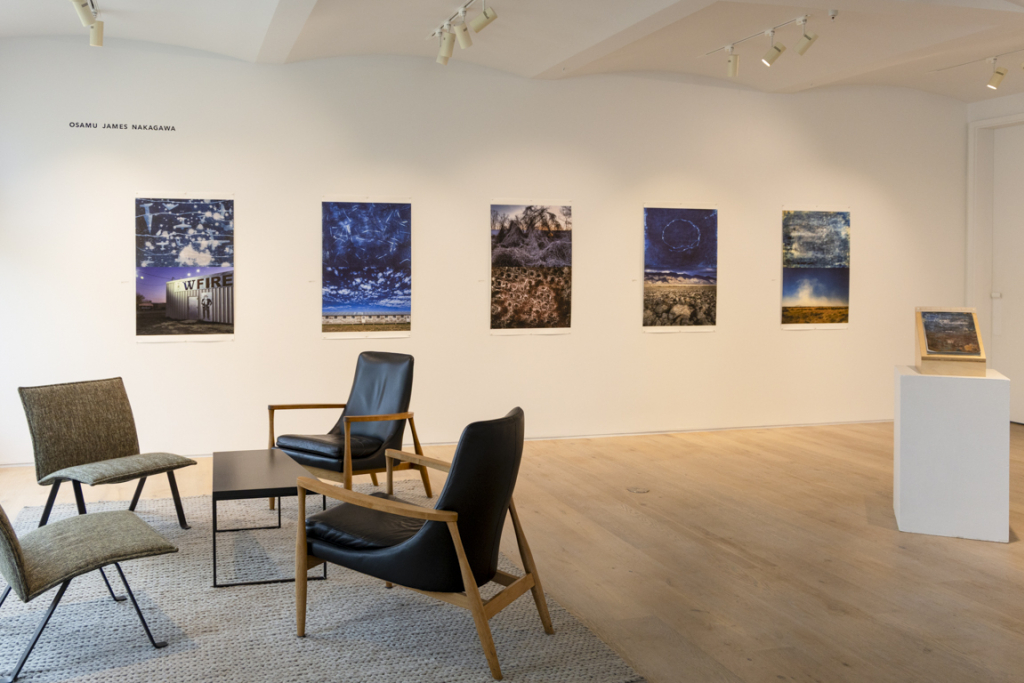
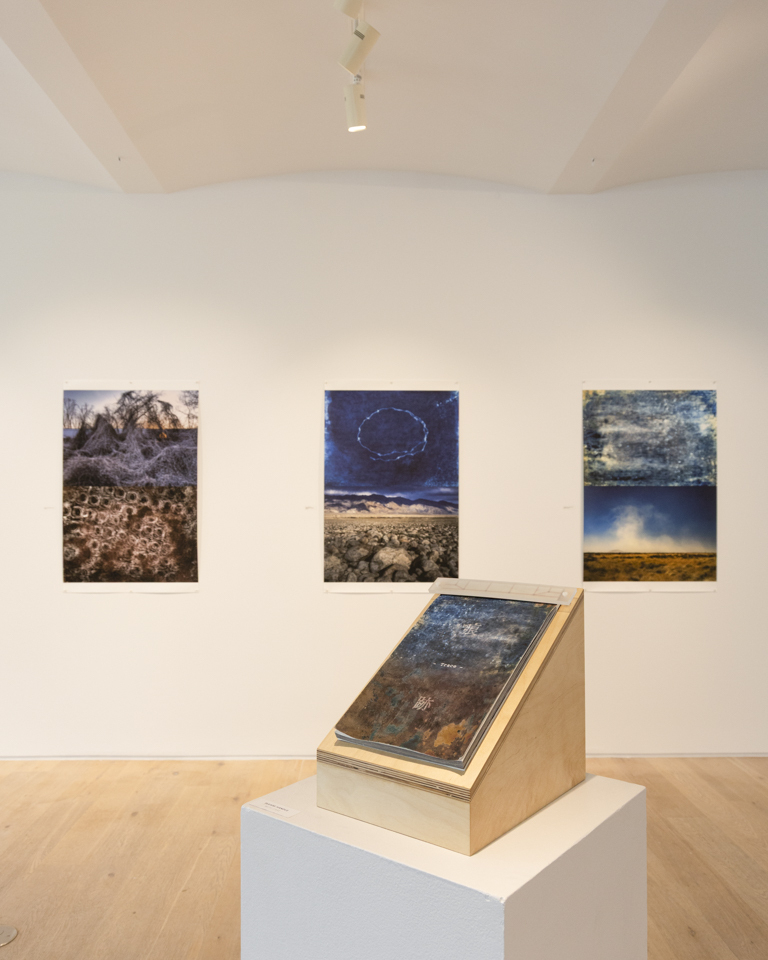
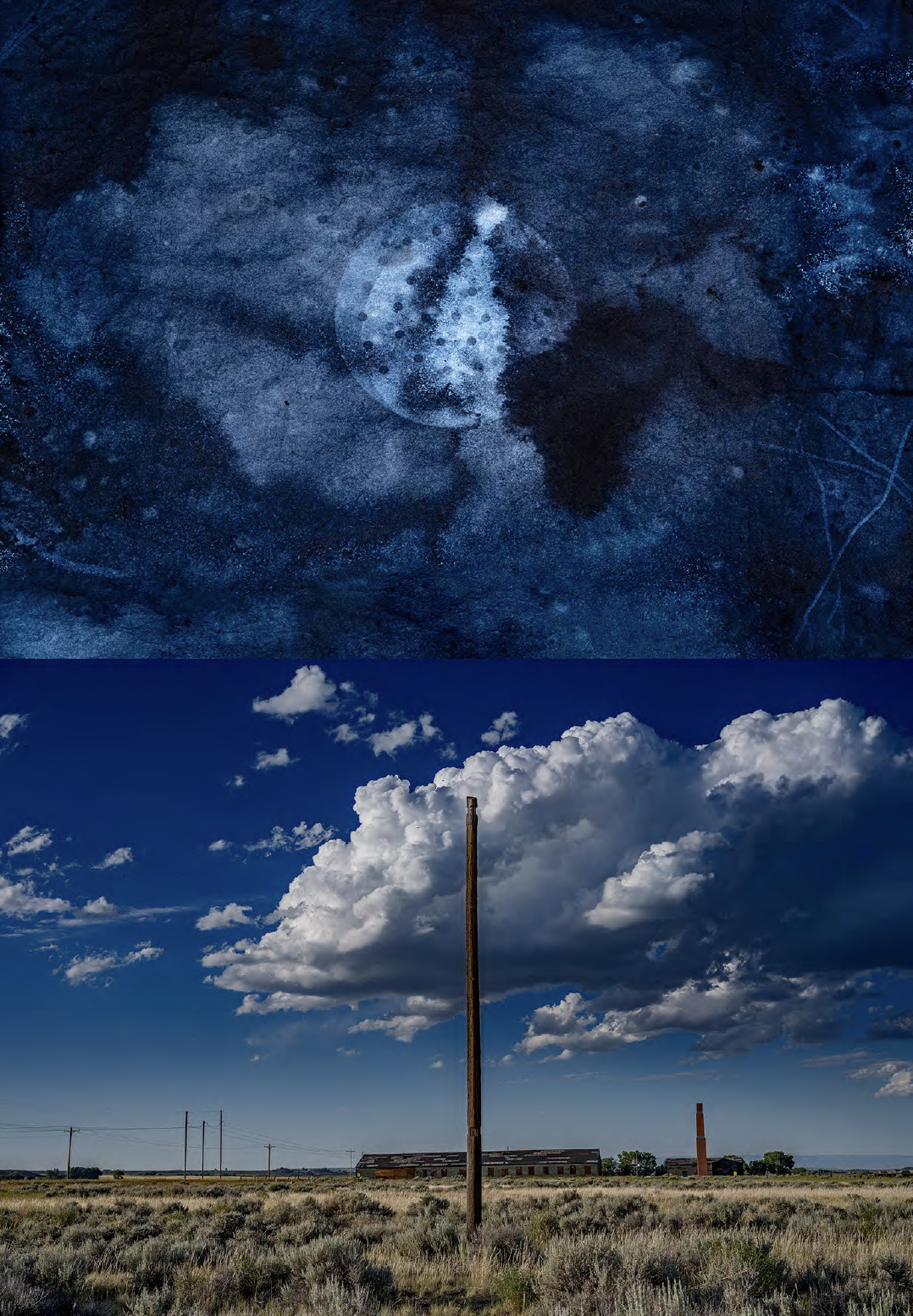
In vertical diptychs, Nakagawa stacks the cyanotypes and salt prints with photographs from the internment sites. In past work, Nakagawa has often represented his emotional experience of place, rather than a documentary depiction of it. Formally and conceptually, Trace hovers on the line between these two manners of seeing. In this way, the diptychs can be seen as a splitting of the psyche into conscious and unconscious awareness.
In some of the diptychs, a cyanotype is placed above a photograph of the actual sky, and the line between the two begins to blur. The deep indigo transforms into an expanse, a speckling of stars and a swirling cosmos. A vast sky can be liberating when you have the freedom to wander into it, but here it is blocked by criss-crossing lines of barbed wire. It is one thing to see these shackles in a photograph, and another thing to experience them to scale, right in front of you. The observer is briefly trapped. Those from the past were trapped for three years of internment. Banal objects take on significant meaning in these images. The moon is a shower drain. Free and easy clouds turn into nails. A constellation is just a length of sharp wire.
Camps were built along the railway lines for convenience, to transport people to remote places where they could be hidden from view. In Railroad, Tule Lake, train cars line the top of the frame, with rosy brown layers compressed beneath them like the strata of time. The salt print sits under the street, like a deposit of memory in the sediment. Here is the murkiness of things that have been buried from sight. Truth and trauma lie tangled together below the surface. Where the past feels hard to reach, Nakagawa unearths shrouded emotions, to be encountered again here in the present.